

I was so lonely so much of the time in New York, but I did enjoy doing things alone becuase I could give them my full attention. I visited museums, took walks, and explored without the component of discussing it. So when none of my friends took me up on another historical walking tour, I thought, this is kind of nice. I’ll be with my thoughts, and I’ll be with randos.
On our episode last week, you may have noted that I toured Westport, the historic party district of Kansas City. This episode takes place in an early suburb built around 1919. In Kansas City, this rich racist guy, J.C. Nichols, built suburbs and shopping districts around that time. It can feel weird, because the way he built things is still quite nice. The places he built are walkable, with human-sized buildings (only 2 or 3 stories, max) and architectural detail that isn’t necessary, and is quaint.
The area of this tour has gone by multiple names. Today we call it “Brookside.” Sometimes it has been called “The Country Club District,” by which I assume people meant, “the area safe from people of color and Jews.”
The shopping district of Kansas City is usually called “The Plaza,” but its full name is “The Country Club Plaza.”
As someone raised by a Navy brat, whose father was an officer, but rankled at how he was forced to go to the “officer’s kid” barber… we were not into country clubs of any kind.
To return: I imagine the Plaza dropped the “Country Club” part because at some point it sounded creepy. I imagine that after 1948, when keeping people out of certain neighborhoods became de jure illegal, it felt better to call the area “Brookside.”
I did notice that every single person out and about that evening in Brookside was white, except for a waiter. I’ve spent quite a bit of time hanging out in that neighborhood, because the school where I worked for eight years was nearby, and the bar where the teachers drank was there. Love you, Brooksider. I do remember that the bars had rules about wearing jerseys and sagging and do-rags, that is, racially tinged rules to make white people feel safer.

We began the tour at the Wornall home, one of two antebellum houses in Kansas City. The Wornalls enslaved people. They had a lot of land. Their house got used as a field hospital for first Confederate, then Union soldiers in the Battle of Westport. There were stories of ghosts.
I wish ghosts were real. I think the dead could give us some really valuable input.
There were 30 people waiting for the tour, which made it quite unlike last week’s, when the entire group was me, my two friends, and one other dude.
And we had headsets for the guide’s microphone!
The headset was made so that it would fit over your ear, and I immediately felt like I didn’t know my ear shape, or my ear’s physics. How the hell did this fit on there?
I looked hard at a guy near me, and then I said, “I’m sorry, I’m staring at your ear because I can’t figure out how to put this on,” and his female companion said, “Here, let me,” and wrangled my ear for me.
This is a nice thing about being alone. You find helpers.

Brookside has 100-year-old houses, some with Tudor features, and some of those nice rectangle-focused houses that look like the peace of geometry. They have small yards and big trees. I followed the leader.
About half the stories were about horrific domestic violence, and how no one gave a shit.

But: one was about how they had a secret society called The Grange in the old school building, and people said they kept a goat in there so that people could ride it when they were initiated. I’ve held some initiations, but man, I aint never had a goat participate.
Okay, though, domestic violence: a man tying a woman up inside her own home, being rescued by a passerby, and then her husband is fined $500. Two different women wanting divorces, one stabbed to death by her husband, and one who had acid thrown in her face. Both were sentenced to 3 years or less in prison.
While I was pondering deep in my bones that truly, being a woman was being a thing, and in some cases, still feels like it, we trooped on.
The stories of the Italian restaurants in the area were great! As with the Westport tour, let me add my personal history here. One Italian restaurant was, in my memory, always a very gay restaurant called Michael Forbes. I don’t know exactly how we knew it was very gay. I recall eating there at least once, and we didn’t return because the food wasn’t particularly appealing. Also we weren’t gay.
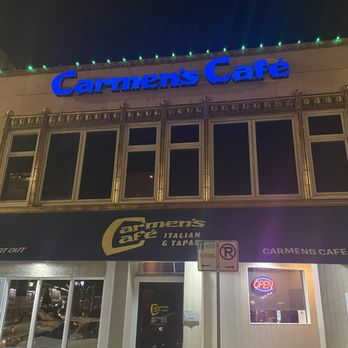
The other Italian restaurant in this story is Carmen’s. I’ve had many lovely dinners there with a friend who lives in the neighborhood. It’s what you want an Italian restaurant to be: dark, cloth napkins, white bread in a basket, deep red sauces.
Both of these restaurants, in the late ’80s and early ’90s, were investigated for gambling, sex trafficking, and illegal video poker. In the late ’80s! I definitely ate at the Mexican joint nearby in the late ’80s! I definitely drove by the Mexican joint to buy cigarettes from the vending machine that was hidden in the entry. We had to put together a lot of quarters. I think $2.50 worth.
Kansas City has some juicy mafia history, but I was completely unaware of this connection. Most Kansas City mafia stuff is either in the old Italian neighborhood or on the river, where the mafia blew up nightclubs.
The last story I loved is about Stockholm Syndrome.
Maybe.

Mary McElroy was the daughter of Kansas City’s city manager. The city was actually managed by machine boss Tom Pendergast. (All the big civic buildings in Kansas City are concrete because Pendergast sold concrete, and all of them have dead enemies forever entombed in them. Maybe.)

In the 1930s, kidnapping was hot. Two guys pretending to be deliverymen got into Mary’s house. She was in the bathtub.
Wait! Don’t worry!
They politely waited for her to get dressed before kidnapping her. She put on white shoes. It was before Memorial Day. I know.

They took her to a farm outside of town (well, today in Shawnee, Kansas, a suburb). They handcuffed her to a wall of a farmhouse basement.
They all chilled together. It is said she “befriended” the guys.
The next morning (okay, she wasn’t kidnapped for long), they got their money, and they released her, with train fare to get home.
Three of the four the kidnapping conspirators got caught. Two got prison time, but one got the death penalty. Mary was upset by this. She did not want this man, Walter McGee, to be executed.

In fact, Mary successfully requested a stay of execution for Walter.
She visited her former captors in prison often. Because she felt sorry for them? Because she liked them more than other people she knew? She said that they were the only people who understood her.
Okay, here’s the sad part. Mary spent years being hounded by the press about her supposed romantic relationship with Walter. (Yeah, the papparazi has always been a thing.) After Pendergast fell from power, and her dad lost his job, Mary took her own life.
But man I wish the “Fargo” series set in Kansas City had been about this story.
We walked down a sidewalk with deep footprints set in the concrete, making two deep well. “Those don’t look like kids’ shoes, do they?” the man ahead of me said.
“No, some grown-up had fun there,” I said, and smiled.
Other good stories were told, but I won’t spoil more of what the historical society should be selling. You can look up the shoe bandit, and the theater fire, yourself, if you wish.


