
Peter cutting off someone’s ear is in all four of the gospels. They call him “Malchus.” It was part of the tradition that all four groups (represented by the four texts) found significant. Peter’s so pissed off that he lashes out at the lowest man on the totem pole, a slave. Peter’s so pissed off he becomes what he hates.
John doesn’t have Jesus heal the guy. John’s Jesus is like, I’m doing what I’m doing, cool it. Then he has a friend of Malchus’ running into Peter later and being like, wait… aren’t you the asshole who cut off my buddy’s ear? And Peter is like, nah, nah, nah. Nah. Haha, no.
Luke’s Jesus says, that’s enough, and reattaches the ear. (Luke is into health care, and that’s why the hospital I was born in is named after him.)
What is with this story, I thought this year during Holy Week.
A medium dive into Malchus and people losing their poor, cute little ears.

I like how Malchus here looks like he’s in a Munch painting, and Peter gets both a sweet filigreed halo, and mean eyes that say, “I will cut you,” though his arm and his white hair makes me wonder if he has the eyesight to lop off an ear.
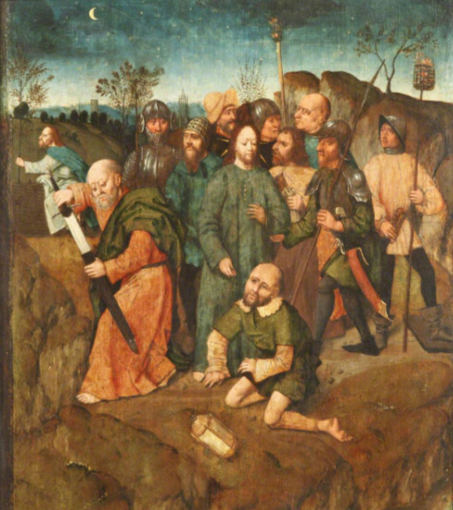
I also enjoy this portrayal, with Peter putting his sword away like, “Hunh!” Jesus holding an ear in his hand like, oh, boy, let’s get this back on, and Malchus’ face looking unbothered. The painter (Michel Sittow, 1469–1525) has made a bunch of other expressive faces, but Malchus looks like he’s getting a school picture taken. I guess he’s in shock.
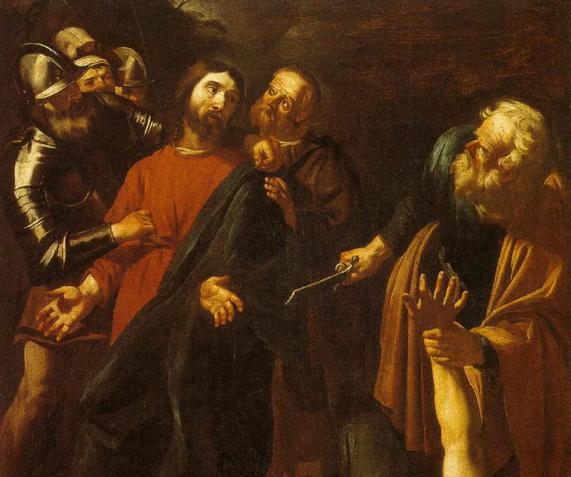
This is by Dirck Van Baburen. The look between Jesus and Peter is perfect. Jesus is like WHAT THE HELL ARE YOU DOING and Peter is like, pardon?
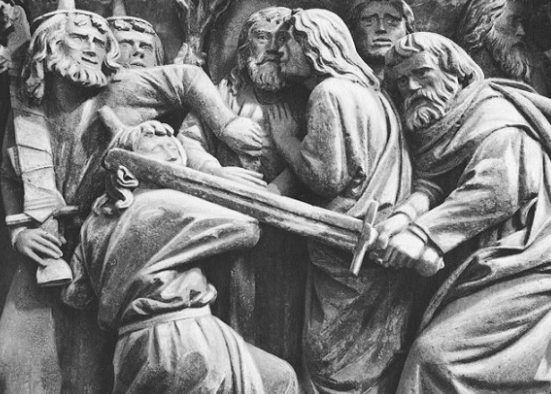
This one’s from 1250. It’s the only one that hits SLICE IT OFF energy that I’m looking for, as a person who grew up visiting a very graphic “holding John the Baptist’s severed head over a plate” painting in my hometown museum.
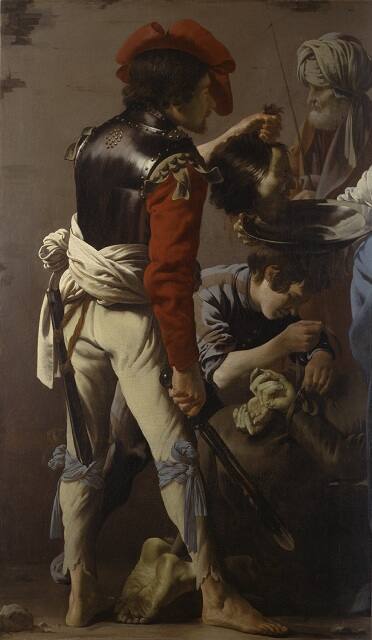
Uh, yeah. I remember being told to note the pale color of John’s feet and hands BECAUSE HE’S DEAD
I’m not sure why this piece has SO MANY CAPITAL LETTERS.
(Hendrick Terbrugghen, 1620s, Nelson-Atkins Museum of Art.)
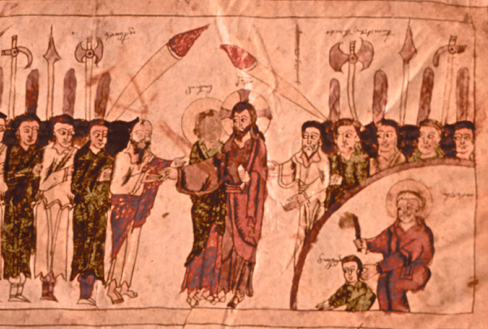
This one makes me laugh: Malchus looks like he thinks he’s going to get a haircut, while Jesus is easily dealing with the situation at hand. While it may look like it was drawn by your friend in study hall, it’s actually from an 11th century Armenian manuscript.
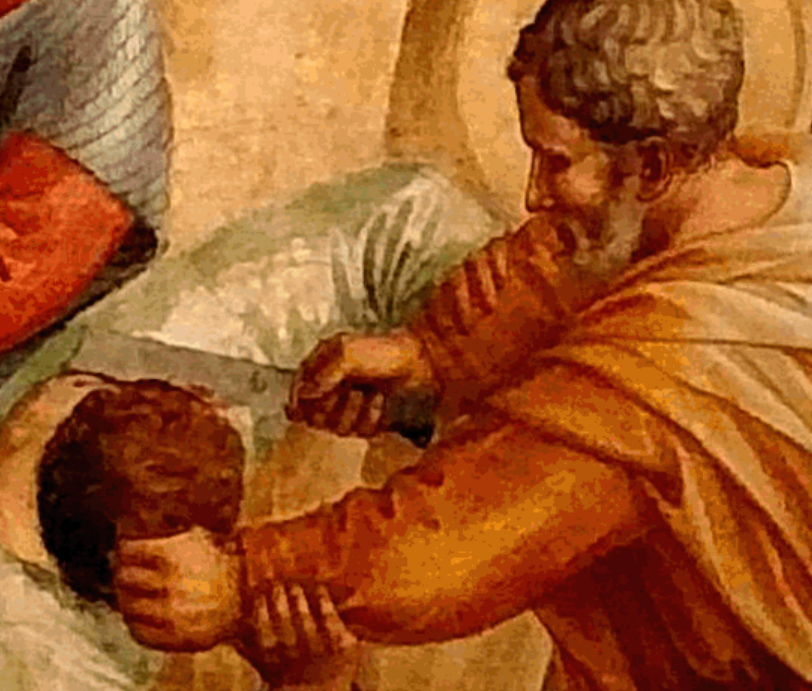
This is the most gangster, by Fra Angelico, painted in 1441 in Florence, reminds us the mafia came from Italy.

Okay, this is also the grisly version. This is what it would look like to cut off someone’s ear. This Peter has cut up a lot of fish, and he might be a Hell’s Angel. Cutting off an ear with a knife this size seems way more doable than using a whole sword. Duccio di Buoninsegna painted this one in the late 1200s or early 1300s.
Van Gogh cut off his own ear off. He did a self-ear removal, right before Christmas. (You’re not the only one to freak out around Christmas, are ya now?) It seemed right to wrap it up in paper and give it to a friend. The friend was a waitress who sometimes served Van Gogh, and she was a housekeeper at a brothel. She really needed the money because she’d been bitten by a rabid dog.
Self harm. I prefer to do it WITH MY THOUGHTS.
Now you might wonder, those are two odd incidents of ears getting cut off, but those are pretty unique situations, aren’t they?
Well, yes, in the sense that Malchus became famous, and Van Gogh became famous, but ear cutting off has been a thing for a long time.
Around 1,700 BCE, the Babylonians noted in their law code that cutting off someone’s ear was an effective punishment. I guess anything sticking out was vulnerable to such punishment. The fact that someone could still hear after having your ears cut off. Just not as well. The funnel action isn’t going to work for you anymore.
Henry VIII would have your ears cut off if you were charged with vagrancy a second time. (Once is three days in the stocks, three times isn’t a spanking– they’ll hang you.)
Some early white people settling in the American colonies noted that everyone in town had to have the exact same haircut, so if one’s ears had been cut off as punishment for heresy, the scars and lack of ears would be visible to all. (Oh, Connecticut!)
When I drive past the sign for the Missouri Confederate Veterans Memorial, I will now think of this information, about how people who were enslaved had their ears cut off, among other horrors:
The slaves are often branded with hot irons, pursued with fire arms and shot, hunted with dogs and torn by them, shockingly maimed with knives, dirks, &c.; have their ears cut off, their eyes knocked out, their bones dislocated and broken with bludgeons, their fingers and toes cut off, their faces and other parts of their persons disfigured with scars and gashes, besides those made with the lash.” (American Slavery As It Is: Testimony of a Thousand Witnesses, 1839, edited by Theodore Dwight Weld and Angelina and Sarah Grimké.)
I’m not going to go into how some people cut off dogs’ and cows’ ears. This is already sad enough.
Sometimes I think people are the absolute worst, locking up innocents in secret prisons without charges, denying people trials, going to war in Iran for reasons no one can understand, but this is why I like history: people have done fucked up things to each other forever.
And it’s a real advance that we don’t cut parts off of people’s bodies as a punishment.
In fact, today a lot of people go to a lot of trouble to CREATE ears for people who don’t have them. They have learned how to use rib cartilage and skin grafts to make new ears. And I’m really proud of them. Ears look weird, and I am certain that making an ear that looks like an ear is a challenging aesthetic process.
This is just to give you a teeny bit of hope in humanity, from my Easter research to you.
THE END


